Marriage
You Should Have LeftMarriage between the unnamed narrator and Susanna is both a lived relationship and the title of the film the unnamed narrator imagines writing about it. It is defined by a painful contradiction: the couple love each other and do not want another life, but their daily intimacy has become a system of quarrels, fatigue, work pressures, childcare, jealousy, and mutual provocation. When the unnamed narrator discovers Susanna’s messages with David, the marriage’s familiar irritations become an irreversible rupture, and the abandoned household becomes inseparable from the later crisis surrounding Esther and the mountain house.
Identity and Foundation
Marriage is presented first through the unnamed narrator’s attempt to turn domestic life into art. During an argument about whether a screenplay can be art, the narrator imagines a film called Marriage, built from long dialogues, many flashbacks, and no music. The title is described as still available, but the proposed film is already more than a professional idea: it is a way of converting the couple’s own conflict into material. The narrator’s impulse to dramatize the relationship exposes the gap between observing life as a screenwriter and surviving it as a spouse.
The relationship rests on genuine attachment rather than mere habit. The narrator states that the secret of marriage is that the partners love each other anyway, that the narrator would not want to be without Susanna and would even miss her distinctive actor’s laugh, and that Susanna would not want to be without the narrator either. The qualification is equally important: they would be happier if they did not get on each other’s nerves so much. Love therefore remains the marriage’s foundation, but it does not prevent the daily form of the relationship from becoming abrasive.
Their shared life is also materially interdependent. The narrator’s screenplays, including the successful Besties screenplay and its sequel, pay the mortgage on the family’s town house with a backyard. Susanna considers the backyard important for a child, although Esther never actually plays there, while the mortgage remains far from paid off. This arrangement makes creative work, parental responsibility, and financial obligation part of the marital argument. The narrator’s writing is both a source of income and a source of resentment, because the demand to keep producing is entangled with the family’s standard of living.
Daily Intimacy and Friction
The marriage is strained by the physical conditions of family life. When Susanna and Esther enter the room while the unnamed narrator is trying to write, the narrator cannot focus. Esther plays noisily on the carpet, while the narrator keeps scribbling to appear busy and to avoid another accusation from Susanna that the narrator is complaining without really working. The scene is not a simple opposition between a diligent writer and an unreasonable family. The narrator admits being busy, but also admits performing busyness, revealing how work has become a defensive gesture inside the household.
The couple’s arguments often begin with small verbal pressures and quickly expose deeper resentments. Susanna’s distinction between a screenplay being art and being art in the way the narrator means it provokes the narrator into defending films such as La Strada and Barry Lyndon. The narrator then reminds her that the screenplays she may regard as lesser art are paying for the house she values. The exchange binds aesthetic judgment to money, status, and domestic responsibility: Susanna’s criticism threatens the narrator’s professional identity, while the narrator’s reply turns financial provision into evidence against her.
Their evening conversations also show how parenthood both burdens and briefly reunites them. They discuss Esther’s preschool teacher, Susanna’s father, the narrator’s father, and Sigrid’s divorce. The topics are ordinary obligations shared by people raising a child together, but that common practical world gives the marriage a temporary structure even when romance has receded. When the narrator grasps Susanna’s hand and she declines intimacy because she is tired, both retreat behind the explanation of mountain air and exhaustion. The gesture is met not by renewed closeness but by a tired recognition of the limits imposed by their life.
Earlier, however, the marriage can still recover a sense of its beginning. The couple sit at the table until two in the morning, drinking wine and talking as they did nine years earlier, when they first met on Schmidt’s set. The unnamed narrator remembers an immediate, almost total desire to touch Susanna, kiss her, learn everything about her, and spend a life with her. Susanna remembers that she once could not have imagined yelling over diapers or arguing about babysitters. Their recollections place the present marriage between two versions of time: the intensity of first meeting and the prosaic demands of shared parenthood.
The narrator responds to Susanna’s reflection by calling this change the natural course of things. Susanna invokes Heraclitus through Ovid’s formulation that there is nothing in the world that stays the way it is. The idea comforts and irritates the narrator at once, because it also recalls Susanna’s university education and the narrator’s sense of intellectual difference. Yet, for a moment, that difference does not dominate. Together they remember candlelight, narrow glasses, bars, films, theater, and moving between their apartments. The sequence presents their early relationship as repetition made new: familiar actions experienced as if they had never happened before.
Crisis, Jealousy, and Disclosure
The marriage changes decisively when the unnamed narrator discovers that Susanna has preserved messages from David. The narrator tries to remain composed, intending to observe Susanna and determine how deep the deception goes rather than immediately expose the discovery. That attempt lasts only a few minutes. The evidence on the phone overwhelms the narrator’s effort to behave like a detached observer, and domestic reality begins to resemble one of the narrator’s own films without acquiring the wit or distance that fiction can provide.
Susanna does not deny the affair. The narrator asks who David is, repeatedly returning to the question while recognizing that speculation about his occupation or connection with Susanna’s films cannot resolve the real injury. David’s identity matters less than the fact of the hidden intimacy. The narrator’s uncertainty becomes a form of fixation: the unknown man is both a concrete rival and a blank space onto which anger and humiliation are projected.
The phone becomes the physical object around which the marriage’s moral conflict crystallizes. Susanna explains that people caught in affairs are often exposed because they cannot delete messages. She describes the jealous partner’s persistence and the attachment that leads an unfaithful person to keep the device close while still underestimating the other person’s determination to find it. Her account is simultaneously an explanation, an accusation, and an acknowledgment that the narrator’s jealousy is not baseless. When she says that the narrator went through her bag, the dispute shifts from the messages themselves to the method of discovery, but the shift cannot erase what the messages reveal.
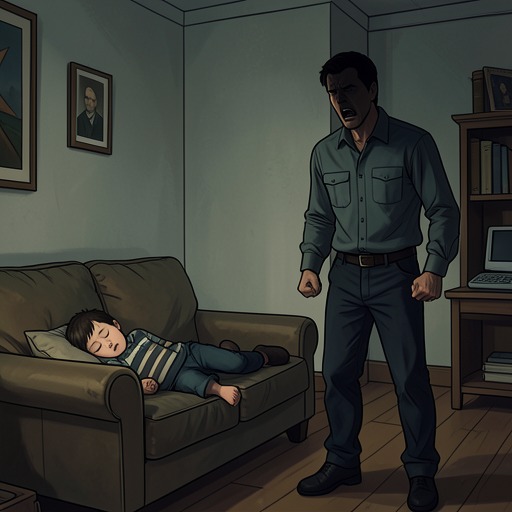
Esther’s presence interrupts and reshapes the confrontation without repairing it. When Esther speaks through the baby monitor, Susanna immediately goes upstairs, picks her up, and tells her it is time for bed. The narrator remains below, immobilized, while Susanna resumes a calm, maternal role. The child becomes the point through which the household’s emotional force is redirected: the couple cannot continue the argument without confronting their responsibility as parents, yet caring for Esther only postpones the marital reckoning.
Separation and Aftermath
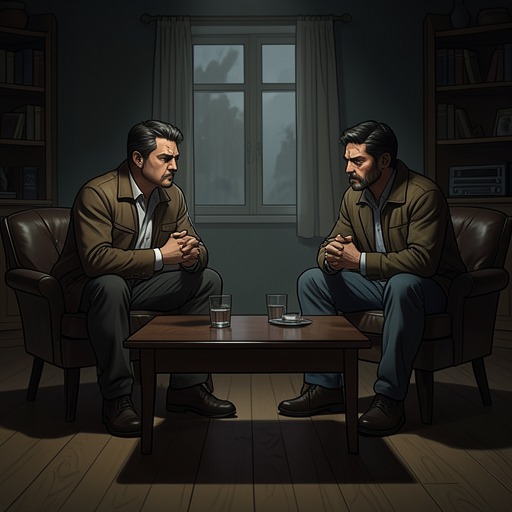
The ensuing quarrel is remembered in fragments rather than as a stable sequence. The unnamed narrator recalls shouting, striking the table, crying, calming down, asking questions, and watching Susanna move back and forth. At another moment Susanna is crying at the table while the narrator stands by the window; later they face each other across the table and shout simultaneously. The broken recollection conveys not only intensity but a failure of comprehension. The narrator can record the physical arrangement of the scene, yet cannot organize it into an explanation that makes the marriage intelligible again.
The narrator still wants reconciliation even after the disclosure. At one point, the narrator wishes to go to Susanna, place both hands on her cheeks, and say that everything should be forgotten because of love. The gesture is attempted, but Susanna asks to be left alone and insists that the narrator does not understand. Their remaining tenderness therefore has no restorative power. Love survives as impulse, while trust and shared interpretation have collapsed.
Susanna finally leaves the house. The narrator hears the front door slam and the car engine start, followed by a faint rushing silence. The departure converts an argument into separation, but it does not produce clarity. The narrator has written everything down and still does not understand what has happened. The immediate practical question is what to do the next morning when Esther wakes, making the child the enduring consequence of the marital break.
The marriage’s later meaning is intensified by the mountain-house setting. The unnamed narrator is left with Susanna gone and Esther asleep upstairs, forced to imagine explaining the separation to their daughter. Elsewhere, Esther becomes still and completely relaxed inside the house, appearing freed while the narrator can do nothing. The domestic bond that once organized care, conflict, and mutual dependence is thus placed beside a spatial trap that defeats ordinary action. Marriage is not simply ended by one revelation; its failure leaves the narrator emotionally and physically stranded, unable to restore the family and unable to reach Esther through the rules of the altered space.
Narrative and Thematic Significance
Marriage links the novel’s ordinary and uncanny registers. The couple’s arguments about screenplays, mortgages, diapers, babysitters, agents, and childcare are rendered with the same attention to repetition and distortion that later governs the mountain house. Their relationship already contains a kind of disorientation: the partners know each other’s most effective provocations, repeat familiar disputes, and remain attached despite the damage they inflict. The supernatural crisis does not replace domestic instability; it gives that instability a larger, more terrifying form.
The unnamed narrator’s profession makes the marriage especially self-conscious. The narrator imagines turning it into a screenplay, thinks in scenes and flashbacks, and recognizes the irony of feeling trapped inside a film when Susanna’s affair is exposed. Yet fiction cannot make the collapse entertaining or controllable. In life, the narrator observes, people do not deliver clever lines while everything falls apart; the experience is dismal and repugnant. Marriage therefore becomes the subject through which the novel tests the limits of artistic distance.
The relationship also embodies the claim that nothing remains as it was. The couple’s first meeting, their years of parenthood, their shared house, and their habitual quarrels are not separate phases that can be neatly restored. The early love remains real, but it cannot simply cancel the later betrayal. The marriage’s decisive significance lies in that coexistence: affection persists after trust has failed, practical family bonds remain after emotional unity has broken, and the narrator’s longing to return to the beginning is defeated by the irreversible knowledge of what has changed.